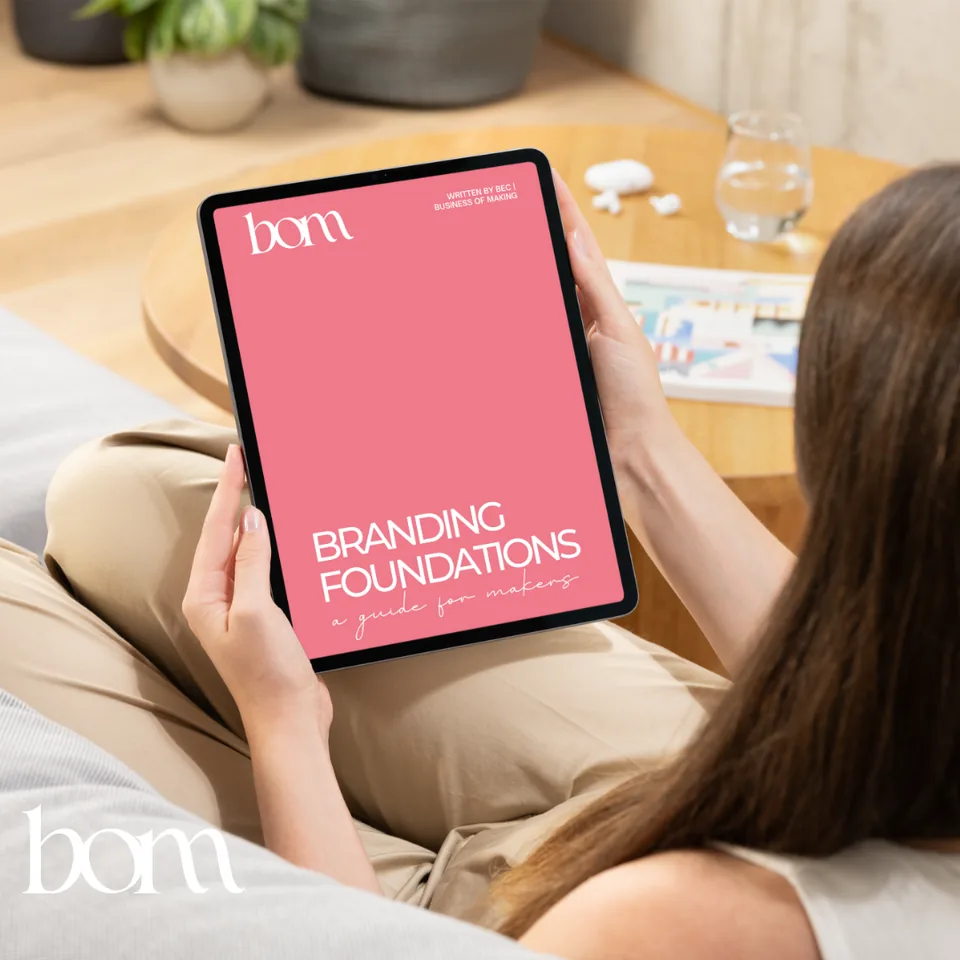
Branding Foundations · A Guide for Makers
Your brand isn't your logo. It's the feeling people get when they come across you, what your customer recognises in a scroll and remembers a month later, and it's what lets you charge what your work is worth instead of racing everyone to the bottom on price. This guide is the groundwork everything else in your business gets built on, done once, properly, in a few evenings. Written by a graphic designer and maker who built her own brand from day one and never had to rebrand, and who has built countless other brands through her graphic design and digital agency over the past decade. Me. It's the part of business I love most, and the part I'm best at.
$29, usually $39. A PDF download, yours to keep.
You know the feeling. You try a new font, a new caption style, a new product line because it's doing well for someone else, and nothing quite sticks. Without a clear brand you're a ship with no course, and every one of those little decisions draws from the same limited pool of energy. Psychologists call it decision fatigue. It's why you can feel completely wrung out after a day of choosing fonts and colours.
Here's the bit most people get wrong. Your brand isn't your logo. Your logo is one tiny piece of it. Your brand is what people say about you when you're not in the room: your products, your photos, your captions, the way your parcel arrives, how you reply to a hard message. For makers it matters even more, because people aren't just buying a thing. They're buying from you.
When your brand is clear, people recognise you and remember you. Trust follows, and trust is what lets you charge what your work is actually worth.
You're brilliant at what you make, and the business side feels like a different language. You might be sewing, painting, pouring, printing or laser cutting. Whatever it is, people love it.
You're juggling a lot. A day job, kids, or something else that takes most of your week. Your making happens in the gaps: early mornings, after bedtime, a Saturday at the kitchen table. You sell on Etsy or Instagram, maybe at a few local markets, and you've had enough sales to know you're onto something.
Quietly, though, you're wondering. Why does my page look a bit all over the place? How do other makers make it look so easy? You've saved a hundred posts about branding and you still aren't sure where to start. You're tired of advice from people who've never run a maker business. What you really want is someone who's done it, to sit down with you and say, here's what actually matters.
You won't tick every box, and you don't need to. If one of those landed, you're in the right place.
Hi. I wrote this for you.
As a laser cutter and a graphic designer, I've seen hundreds of logos that just aren't going to work. AI-generated logos. Blurry, low-quality files. A picture or two stacked on top of each other with some text slapped over the top. The moment you want it engraved, cut in vinyl, embroidered on a shirt or blown up for a market banner, it falls apart, and you're starting again.
That's the small version of a much bigger pattern. Jumping straight to the logo before the foundations are there. Changing the look every few months. Copying another maker's style or voice. Trying to appeal to everyone. Each one costs you money, time and the trust you'd started to build, and a rebrand is the most expensive way there is to find out what you actually stand for.
When I started my first maker store in 2019, I brought everything I knew about branding with me. We built it properly from day one, and we never had to rebrand down the track. That's what I want for you too.
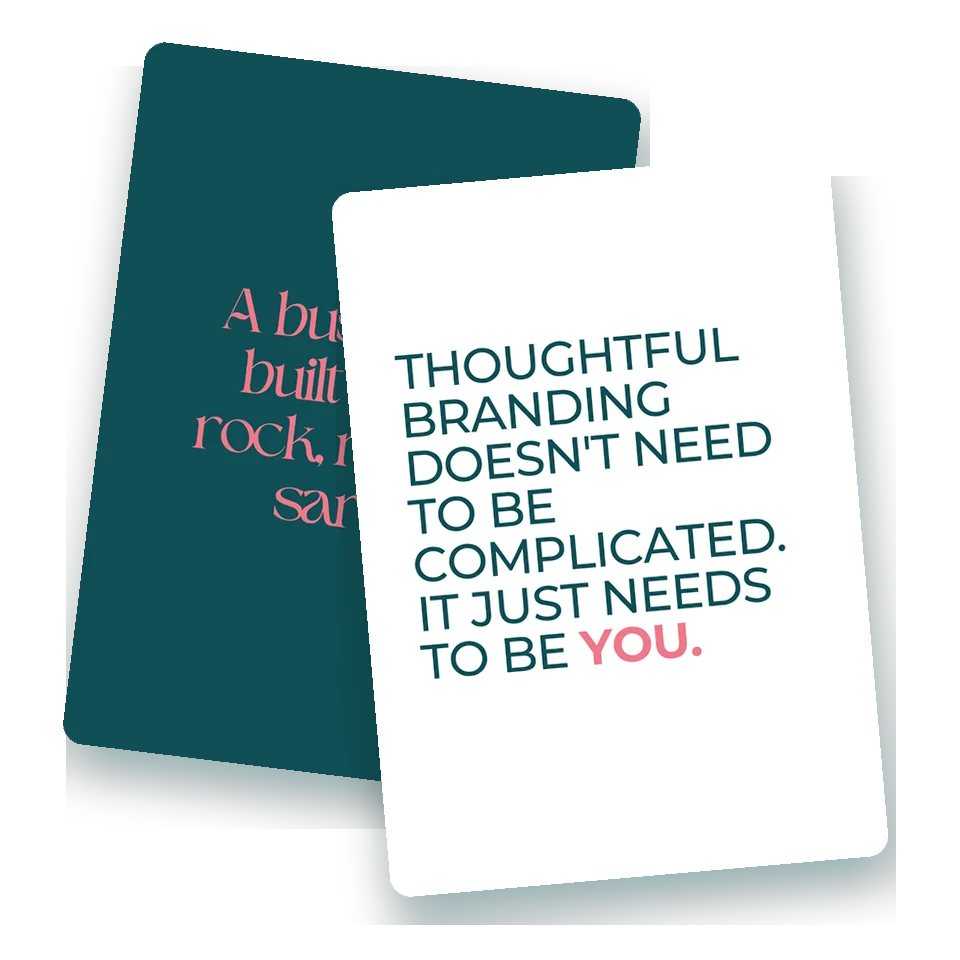
A business built on a rock, not on sand.
The logo and colours come last, on purpose. They should be the expression of everything else, not a replacement for it. Keep a notebook nearby.
What a brand actually is, what it does for your prices, and why a clear one takes a whole heap of decisions off your plate.
Why ordinary is exactly what people connect with, the three things a good brand story answers, how to bring your customer into it, and where to use it once you've got it. With mine as the example.
My favourite bit, and where I see the biggest changes happen. How to find your favourite customer and turn her into one real person you write to, and why narrowing down doesn't mean missing out.
You were never meant to win on price. Why people's brains reach for price when they can't see a difference, how to find your thing, and the one sentence I use with clients to pull it together.
Your personality in a handful of words and how it talks in practice. Then the visuals, kept simple: the only four pieces you actually need, including the one most makers forget, how to build them without a designer, which files to save, and the checks to run before you lock it in. With how I did mine.
The part that actually makes it work. Every place someone bumps into your business feeling like it came from the same place, the unboxing moment where makers outshine the big brands, and where to start if you can't fix everything at once.
Your whole brand on a single page, the traps I see makers fall into all the time, and how to use what you've built as a filter for every new product, collab or trend.
Short chapters, plain words, and a few things done on purpose, so you finish with a brand in your notebook rather than a head full of ideas.
Written the way I'd talk to you across a table. One idea at a time, in the order you need it, with no corporate jargon and no promise of overnight success.
A page of questions at the end of every section, so the answers are yours and not mine. There's real psychology in writing it down: unfinished thoughts keep nagging at us, and once they're on paper your mind can let go and move on.
My story in one line. My reader. My logo and submark, and why I chose them. My colours, and the one I swapped because it looked like a placeholder. You see the thinking, not just the result.
Why a clear brand saves your energy, why people snap to attention when something feels made for them, why familiar things earn trust, and why the moment a parcel is opened matters so much. Each one explained, and what to do about it.
The mistakes I see makers fall into all the time, named plainly so you can sidestep them. Including the one that lands people with a hefty bill.
Please don't spend months and a small fortune agonising over your logo. Done and consistent beats perfect and never finished. The guide is built to get you there in a few evenings.
have a think
Three of the questions from the guide. There's a page like this at the end of every section.
If you write things down as we go, you'll finish with all the pieces of your brand sitting in your notebook. That's more than most makers ever sit down and work out.
That's your foundation. Your rock.
A year from now, you could still be changing your fonts every few months and wondering why nothing sticks. Or people could be recognising you before they see your name, and trusting you enough to pay what your work is worth, from a brand you built once and never had to redo. The guide doesn't do it for you. It sits beside you while you do it, in a few evenings.
Branding Foundations
$29RRP $39
One avoided rebrand pays for it many times over.
Checkout happens on the Business of Making store. Prices are in Australian dollars.
Branding is my favourite part of any business. There's something special about sitting down with a business, working out where it wants to go, and building the foundation that gets it there. I've been doing exactly that for more than a decade through my graphic design and digital agency, for florists, builders and countless online stores, and for long stretches there's been a waiting list of businesses wanting it. I say that not to impress you, but so you know this guide isn't theory. It's the process I use with clients, written down for makers.
I built my own two maker stores the same way, brand first. Between them they've done around 100,000 orders and more than $3 million in sales, and the first grew into Australia's largest craft blanks supplier without ever changing its look. There are plenty of business coaches out there. The difference here is that this is my craft, and I've done it with my own maker business too. I'm not a faceless brand or a guru with a formula. I'm sharing what I actually do, the good bits and the messy bits, because I genuinely want to help.
The foundation I build for clients, written down for you.
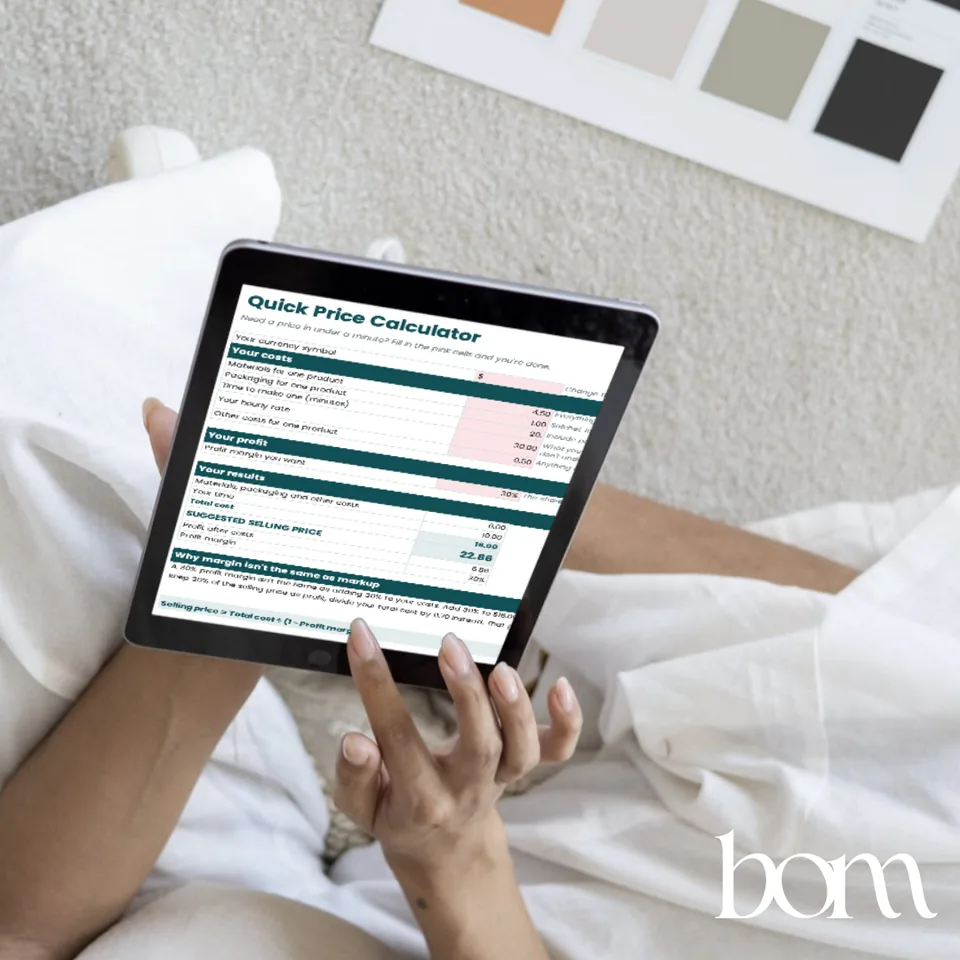
Pop your email in and I'll send you the Quick Price Calculator: six numbers and a price in under a minute. This is just the start. I'm building more for makers all the time, new freebies, mini courses and guides, and the list hears about every one of them first.
Check your inbox for the calculator. If it isn't there in a few minutes, look in the promotions or junk folder. New things will land there too.
Four resources, in the order most makers need them. Start wherever you are, and come back for the next one when you’re ready.
Know what one product should sell for, in under a minute. Free, and it comes with 20% off the full calculator.
Decide what it should be, plan it, price it, make it official and launch it. The plan on one page.
Work out who you’re for and why they’ll choose you, then keep every decision in one guide.
Price your whole range, know what each product really pays you, and plan the sales you need.
Makers who sell, or are about to, and want a brand that feels like them. If your brand grew by accident and your page looks a bit all over the place, this is the one. If you've got a brand you love and it's working, you probably don't need it.
Yes. The logo is one tiny piece, and it comes last. Most of the guide is the thinking underneath it: your story, who you're for, why they'll choose you, how you sound. If your logo passes the checks near the end, keep it. If it doesn't, you'll know exactly why.
No. Nothing in here needs design skills. Where you do need to make something, I walk you through doing it yourself in Canva, with the files to save and the mistakes to avoid.
Bits of it, across a hundred saved posts that contradict each other, most of them written by people who've never run a maker business. This is the whole foundation in one place, in order, with the psychology explained and my own brand as the example. A PDF, yours to keep, for $29.
This guide helps you decide. The template keeps the decisions: a polished Canva document you hand to a printer, a designer or anyone who helps in your business. Do this one first. Your 50% off code for the template is inside.
Yes. Branding doesn't have a country. Your story, your customer, your difference and how you look and sound work the same wherever you sell, and nothing in the guide depends on where you live.
Read it in an evening or two, then work through the have-a-think pages at your own pace. Start with whatever people see first, usually your Instagram and your product photos, and work through the rest bit by bit. There's no deadline on any of it.
By the last page you'll know why your brand matters, who you're really for, what makes you different, and how you want to look and sound. That's the thinking most makers skip, and it's what you'll come back to every time you feel pulled in ten directions. Pick one evening this week, grab a notebook, and start with the first question.
Your customers fell for the real you. Let them hear it everywhere.
Bec x